

Quick Answer
You can comfortably raise a UK baby in their first year for under £2,000 — not the £11,000 average splashed across headlines — by separating true essentials from marketing. Prioritise safe sleep (Moses basket or cot, firm mattress, sleeping bag), feeding (bottles or breastfeeding kit), nappies and a car seat. Skip wipe warmers, top-and-tail bowls, dedicated baby food makers and most 'newborn' clothing.
Claim every benefit you're entitled to: Child Benefit (£26.05/week for the first child as of 2025), Healthy Start vouchers if eligible, and the Sure Start Maternity Grant (£500, one-off). Buy second-hand for clothes, prams and toys; buy new only for car seats and mattresses. The detailed room-by-room budget below shows where to spend and where to save.
Introduction: The 3am Worry That Keeps You Awake
You are lying in bed, one hand resting on your growing bump, the other scrolling through yet another "essential baby items" list on your phone. The blue light glares back at you with numbers that make your heart race: £800 for a travel system, £300 for a nursery set, £150 for a video monitor... and that is before you have even thought about nappies, wipes, or the terrifying cost of childcare.
The question loops in your mind like a broken record: Can we really afford this? Am I failing my baby before they have even arrived?
If this scene feels painfully familiar, take a deep breath. You are not alone. In 2026, 81% of UK parents report feeling financially stressed, with over half saying they feel worse off than the previous year. The headline statistics are enough to make anyone panic: reports suggest the cost of raising a child to age eighteen has climbed to approximately £250,000 for a couple, with the first year alone costing upwards of £12,400 when you account for equipment and lost income.
But here is the truth that the glossy baby magazines and influencer feeds won't tell you: Having a happy, healthy, and safe baby does not require a five-figure bank balance. The "perfect" nursery is a marketing construct, not a biological necessity. Your baby does not need a designer pram to feel loved; they need a parent who is present, peaceful, and not drowning in debt.
Welcome to the era of the Strategic Parent. Let's get to work.
UK Parenting Cost Statistics 2026
The Economic Landscape: Deconstructing the Cost of Parenting
To budget effectively, you first need to understand the battlefield. The economic environment for UK families in 2026 is defined by high "Baby Inflation" and hidden costs that often blindside new parents.
The "Headline" Liability vs. Reality
Financial institutions often quote that terrifying £12,400 figure for the first year. However, deeper scrutiny reveals that this is an aggregate of disparate spending behaviors. It often assumes:
- Buying everything brand new — from prams to clothes to toys
- Choosing premium brands (e.g., Pampers over Aldi Mamia)
- Paying full-time nursery fees without government subsidy
- Buying "lifestyle" items like £1,000 travel systems
The Gear Acquisition Matrix: Where to Save and Where to Spend
The digital marketing landscape for baby gear is designed to trigger anxiety. "Buy this £1,200 travel system or you don't care about your baby's comfort." We reject this narrative. Instead, we use the "Safety Critical" framework to decide what to buy new and what to buy used.
The "Buy New" List (Non-Negotiables)
You should never compromise on items that protect your baby's life.
- Car Seats: This is the single most critical investment. Never buy a second-hand car seat. Internal structural damage from a minor accident is invisible to the naked eye, and plastics degrade over time (expiry dates are real). Always buy a new seat that meets the R129 (i-Size) standard.
- Mattresses: There is a strong epidemiological link between used mattresses and SIDS (Sudden Infant Death Syndrome). Old mattresses can harbor bacteria, mould spores, and dust mites. Always buy a new, firm, flat mattress for every new baby.
- Bottle Teats & Dummies: These are porous and difficult to sterilize completely once used. They also degrade and can become choking hazards. Buy these new—they are inexpensive.
The "Buy Used" List (The Big Savers)
Here is where you save thousands. The second-hand market in the UK (Vinted, Facebook Marketplace, eBay) is flooded with high-quality items.
- Prams & Pushchairs: A £1,000 Bugaboo can be bought for £250 second-hand. The chassis and mechanical parts are durable. Simply strip the fabrics and wash them at 60°C to sanitize.
- Clothes: Babies grow out of sizes in weeks, sometimes days. Newborn clothes are often worn once or twice before being discarded. You can buy "bundles" of barely-worn clothes on Vinted for £1-£2 per item, compared to £15-£20 new.
- Nursery Furniture: A solid wood cot or changing table lasts for decades. Check for stability and ensure it meets safety standards (bar spacing <6.5cm), but buy the frame used and just add a new mattress.
- Toys: Plastic toys can be sterilized in the dishwasher. Soft toys can be machine washed.
Government Support: Maximizing Your 2026 Entitlements
In the corporate world, "regulatory arbitrage" means using the law to your advantage. For parents in 2026, this means aggressively leveraging the state support infrastructure. The system has changed radically since 2024—make sure you aren't leaving money on the table.
1. The 30-Hour Childcare Revolution (Sept 2025 Update)
The single largest cost for working parents is childcare. As of September 1, 2025, the landscape has shifted.
- The Offer: Eligible working parents of children aged 9 months and older are entitled to 30 hours of government-funded childcare per week (over 38 weeks of the year).
- Eligibility: Both parents (or the sole parent) must work at least 16 hours a week at minimum wage, and neither can earn more than £100,000 adjusted net income.
- The "Term After" Trap: You do not get funding the day your baby turns 9 months. You get it from the start of the term following the date they turn 9 months. Example: Baby born February 2026 turns 9 months in November 2026. Funding does not start until January 2027.
2. Child Benefit
- The Rate: Approximately £25.60 per week for the first child (~£1,300/year).
- The Strategy: Even if one parent earns over £60,000 (triggering the High Income Child Benefit Charge), you should still register for the claim. This protects the non-working parent's National Insurance record for their State Pension.
3. Healthy Start Scheme
- What it is: A prepaid card for fruit, vegetables, milk, and free vitamins.
- Value: £8.50 per week for babies under 1 year.
- Who is it for: Families on Universal Credit with take-home pay of £408 or less per month. The free vitamins alone save ~£10/month.
Government Benefits Summary
Operational Expenditure: The Consumables Ecosystem
Once the gear is bought, the daily "burn rate" of nappies and food begins. This is where brand loyalty is a tax on the poor. The Strategic Parent is "Brand Agnostic."
The Nappy Math: Aldi vs. Pampers
The nappy market is a duopoly of perception. A baby uses approximately 2,500 nappies in year one.
- Premium Brand (Pampers): ~15p - 22p per nappy = ~£450/year
- Supermarket Own-Brand (Aldi Mamia / Lidl Lupilu): ~4p - 6p per nappy = ~£125/year
- Net Saving: £325—just by changing the packaging. Independent tests consistently rank supermarket brands alongside premium ones for absorbency.
Infant Formula: The Regulated Commodity
If you formula feed, do not be fooled by "Gold" or "Advanced" labels.
- The Law: UK law strictly regulates infant formula composition. All Stage 1 formula must contain specific levels of nutrients. The nutritional difference between a £14.50 tin of "Gold" formula and a £9.00 tin of generic formula is negligible.
- Format Matters: Ready-to-Feed (RTF) liquid bottles cost £1.00+ per feed. Powder costs ~12p per feed. Using RTF exclusively can cost £100/month; powder costs £30. Reserve RTF for emergencies only.
Strategic Timeline: A Month-by-Month Procurement Guide
Don't buy everything at once. Spread the cost to manage your cash flow.
Trimester 1 (The Research Phase)
- Action: Calculate your monthly budget deficit during maternity leave.
- Action: Apply for nursery places immediately. Waiting lists can be 18 months long.
- Spend: £0.
Trimester 2 (The Sourcing Phase)
- Action: Scout Vinted and Facebook Marketplace for "bundles" of clothes and second-hand furniture.
- Action: Sign up for Boots Parenting Club and Asda Baby Club for points and freebies.
- Spend: Buy the pram and nursery furniture (used).
Trimester 3 (The Essentials Phase)
- Action: Buy the Car Seat (NEW) and Mattress (NEW).
- Action: Batch cook meals to freeze (saves money on takeaways later).
- Spend: Postpartum supplies, nappies, car seat.
The "Fourth Trimester" (Newborn Phase)
- Action: Register the birth to claim Child Benefit immediately.
- Action: Buy consumables as needed. Don't stockpile too many size 1 nappies; they grow fast!
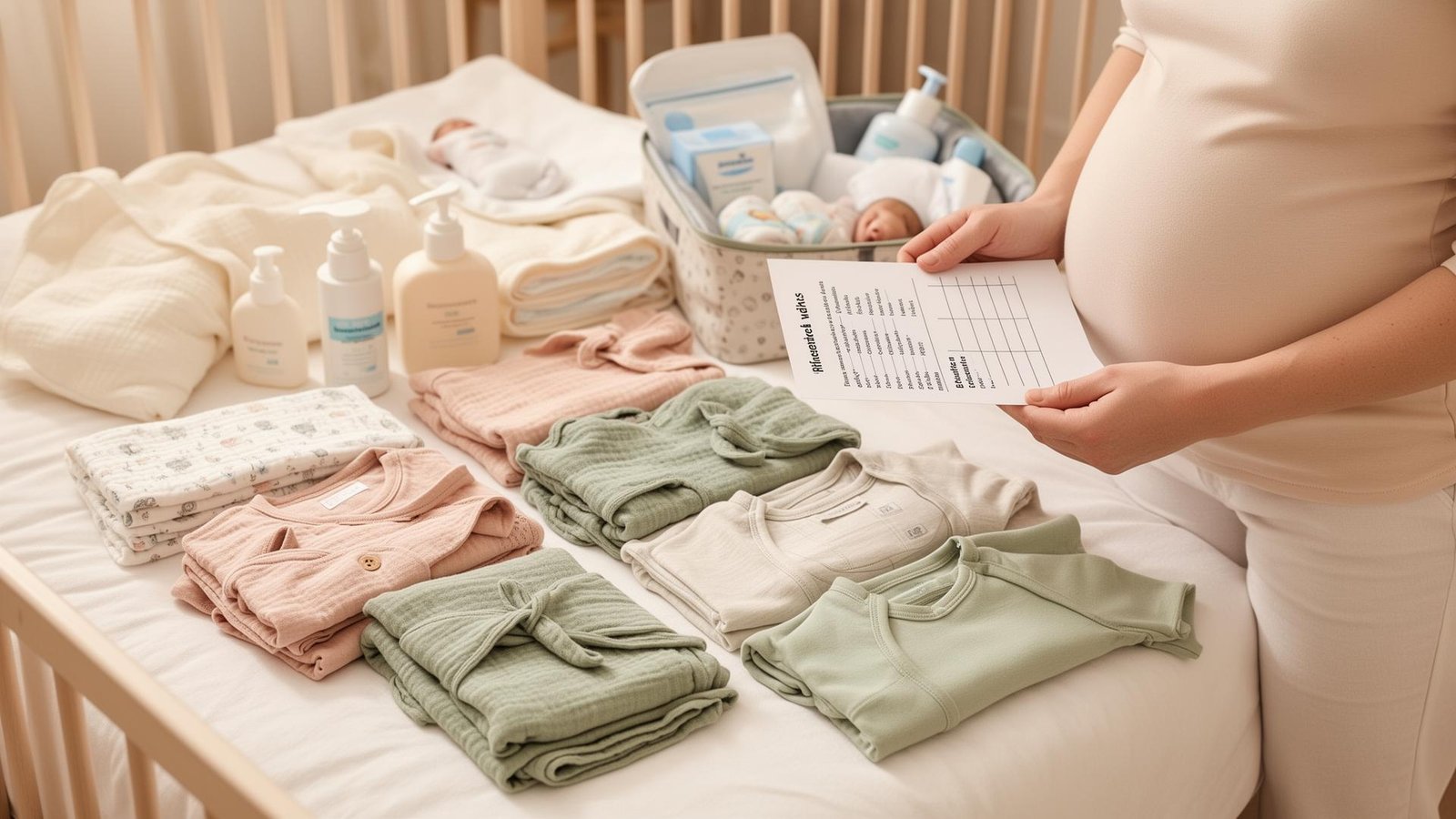
Budget Breakdown: Essential Items Checklist
Here's your strategic shopping guide with estimated costs:
Essential Items Budget Guide
Complete First Year Budget Breakdown
- Sleep: Cot/Moses Basket (used: £50-£100) + Mattress (NEW: £60-£100)
- Travel: Car Seat R129 (NEW: £100-£200) + Pram/Pushchair (used: £150-£300)
- Feeding: Breast Pump (rent/used: £0-£50) + Bottles & Teats (£30)
- Daily: Nappies Month 1 (Aldi/Lidl: £30) + Wipes (bulk/reusable: £10)
- Safety: Stair Gates (£30-£50)
Frequently Asked Questions
Is it safe to buy a second-hand car seat?
No. Never buy a second-hand car seat unless it's from a trusted family member who can guarantee its history. Internal structural damage from accidents is invisible, and plastics degrade over time. Car seats have expiry dates—always buy new.
When should I apply for the 30-hour childcare funding?
Apply through the government's Childcare Choices website as soon as possible. Remember the "term after" rule: funding starts at the beginning of the term after your child turns 9 months, not on their birthday. Plan your budget to cover the gap.
Should I register for Child Benefit even if I earn over £60,000?
Yes. Even if you'll need to pay back some or all of the benefit through the High Income Child Benefit Charge, registering protects the non-working parent's National Insurance record for their State Pension. This is worth thousands in retirement.
Conclusion: The Empowered Parent
If you take only one thing away from this guide, let it be this: You are the expert on your baby.
The baby industry is a multi-billion pound machine designed to make you feel inadequate. They want you to believe that if you don't buy the £800 snoo-cot or the organic bamboo washcloths, you are failing. It is a lie.
Your baby will not remember the thread count of their sheets. They will not care if their onesie was £2 from Vinted or £40 from a boutique. What they will remember—what will shape their entire nervous system and future happiness—is the feeling of safety they got from you.
You cannot buy that presence. In fact, by saving money and reducing your financial stress, you are actually investing in the one thing your baby needs most: a happy, relaxed parent.
So, cancel the guilt trip. Close the tabs with the £1,000 nursery sets. You have a plan now. You are a Strategic Parent. You are going to navigate this year with wisdom, love, and a wallet that stays intact.
Ready to Transform Your Home Into a Safe Haven?
Visit SHC Family Essentials on eBay today to find affordable, UK-standard safety gates, locks, and guards.
Shop Baby Safety Products Subscribe to our blog for more weekly tips on parenting, safety, and home hacks.